Latest

The Oscar Quest: Best Supporting Actor – 1949

Still not sure what I think about 1949. All the King’s Men wins Best Picture, which I think was probably the strongest choice among the nominees. It’s a really great movie. It’s just on the weaker side of all-time Best Picture choices, and that tends to make me feel like the year is on the weak side.

Broderick Crawford won Best Actor for the film (talked about here) and Mercedes McCambridge won Best Supporting Actress for it (talked about here), both of which were terrific decisions. Best Actress was Olivia de Havilland for The Heiress (talked about here), which is one of the best decisions of all time in the Best Actress category (though that specific category was so weak it’s beyond words). And Best Director was Joseph L. Mankiewicz for A Letter to Three Wives (talked about here), which made absolutely no fucking sense to me at all. I cannot even begin to understand how they came to that decision.

And then there’s this category. This is another one of those decisions that I just don’t understand. Sure, the category was weak as hell, but — not Ralph Richardson? After the year he had?

BEST SUPPORTING ACTOR – 1949

And the nominees were…

John Ireland, All the King’s Men

Dean Jagger, Twelve O’Clock High

Arthur Kennedy, Champion

Ralph Richardson, The Heiress

James Whitmore, Battleground Read the rest of this page »

Hugo and the History of the Movies (Part II)

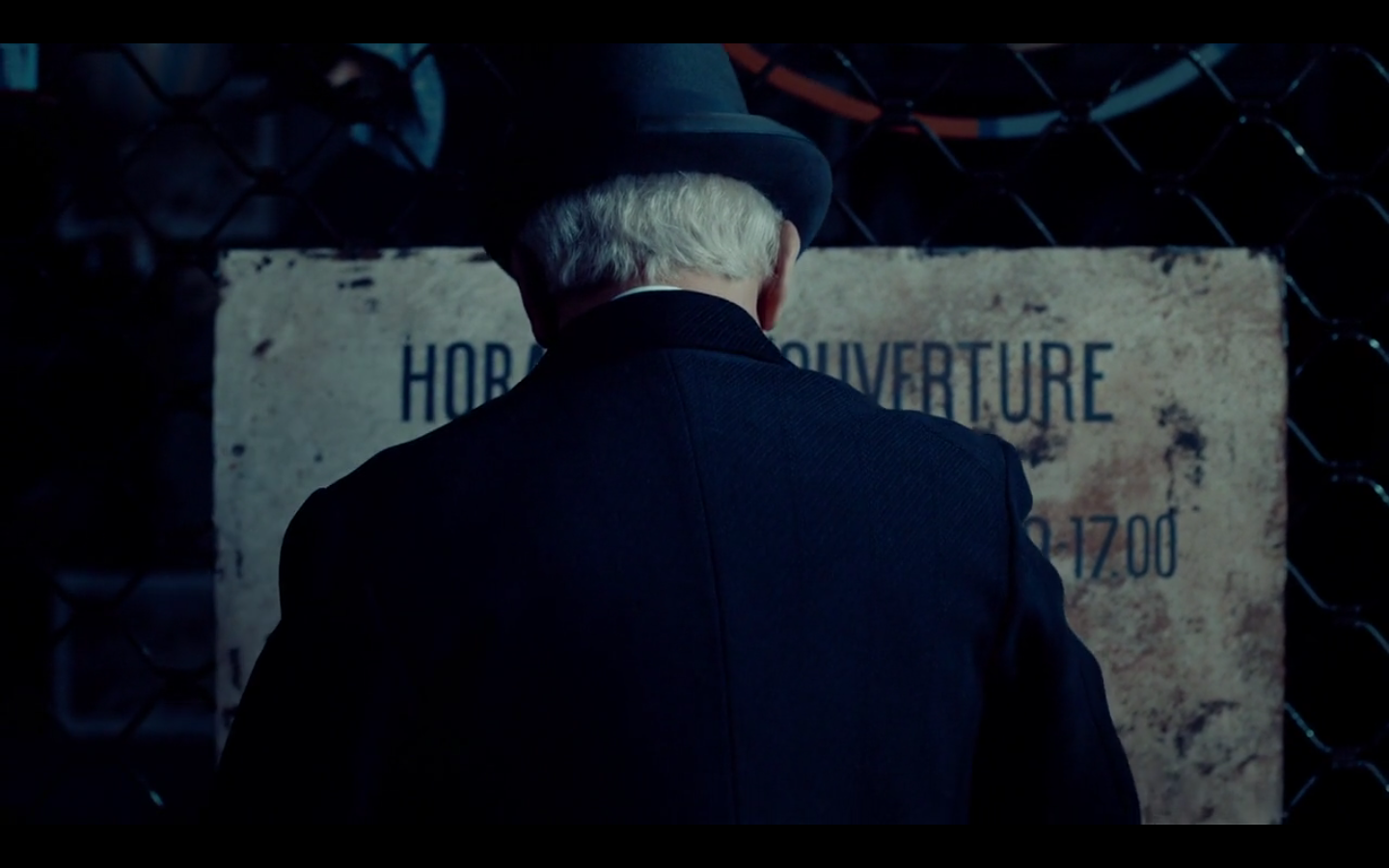
Yesterday, I talked about the first 12-13 minutes (depending on whether or not you want to count the opening studio logos and such) of Hugo and how brilliant they are.

Today — well, I’m just gonna keep going and see where I end up. We start where we left off, just at the title card, which is just about 13 minutes into the film. In fact, this next screenshot I’m about to post happens exactly 13 minutes into the film. Talk about being concise:

Read the rest of this page »

The Oscar Quest: Best Actor – 1936

1936 is a year I feel was the first real Academy decision. You know? Typically, when I say “Academy decision,” I mean one of those films that — of course it won Best Picture. From Here to Eternity, The Sound of Music, Forrest Gump, Titanic — films that you know were gonna win Best Picture no matter their quality. The English Patient. That’s an Academy decision. It’s big, expensive, and it has all the things the Academy likes in their films.

The Great Ziegfeld, to me, is the first obvious Best Picture winner. Strange though, that its director didn’t also win Best Director. That went to Frank Capra for Mr. Deeds Goes to Town (talked about here). That decision makes no sense to me at all. Best Actress was Luise Rainer for Ziegfeld (talked about here), which I think was a bad decision, but one I can sort of understand based on the category. It’s worse, though, that she won the year after this as well. It highlights all the reasons she shouldn’t have won here. Best Supporting Actor (the first in the category’s history) was Walter Brennan for Come and Get It. If anyone should have won the first Best Supporting Actor Oscar, it was Walter Brennan. And Best Supporting Actress was Gale Sondergaard for Anthony Adverse (talked about here). I do not understand this decision at all, and I feel Alice Brady was a much better decision in almost every way.

Which brings us to this category. Paul Muni was gonna win an Oscar at some point. It was only a matter of time. Here’s a dude who just bled Oscar. Everything he did, it seemed, was worth a nomination. He’s the only guy to have his very first performance (The Valiant) and his last performance (The Last Angry Man) be nominated for Oscars. Thing is, though — I don’t think he should have won here. He deserved it, but I don’t think this should have been his year.

BEST ACTOR – 1936

And the nominees were…

Gary Cooper, Mr. Deeds Goes to Town

Walter Huston, Dodsworth

Paul Muni, The Story of Louis Pasteur

William Powell, My Man Godfrey

Spencer Tracy, San Francisco Read the rest of this page »

Hugo and the History of the Movies (Part I)

This was originally going to be my 1,000th post. I was thinking of something to write up, and saw that the article I wrote about my favorite moments from the film was getting a ridiculous amount of traffic as compared to everything else (I guess because of the HD screenshots), so I figured, “Well, that would be fun to talk about how the film relates to film history and all of that, plus I can throw in a lot of screenshots, and make it like those Tron articles (which still get by far the most views on the blog, because people just link to all the pictures).” Basically — fun, and a calculated risk to boost traffic. Because if you can, why not?

So my plan was to write up an article with screenshots about, as the title says, Hugo and the history of the movies. Only, with me, nothing is ever that simple. I started watching the film again (third time now) and then my film student brain turned on, and I started noticing all these great moments, which turned into a whole film analysis, and — it became a whole thing. I can never contain myself to just one article. Ever.

Anyway, here’s part one of me talking about Hugo and its use of and reliance upon the history of movies (as well as some other stuff. Mostly about how Martin Scorsese is a genius). Read the rest of this page »

The Oscar Quest: Best Supporting Actor – 1965

1965 is a strong year that is relatively unanalyzed. Mostly because, when you glance at it, you see, “Oh, The Sound of Music, and Dr. Zhivago was nominated,” and keept going. Clear-cut, no contention, moving on. But, when you look closer, Darling and A Thousand Clowns (not so much Ship of Fools) were also really strong films nominated for Best Picture. So, while the winner was easy to call, the category itself (among some of the others in the year) was really strong.

Robert Wise won Best Director for The Sound of Music, which comes with the territory (plus Lean won twice). Lee Marvin won Best Actor for Cat Ballou, which, as I said here, I hate. I hate it because it’s a terrible decision (Richard Burton or Rod Steiger really should have won), and because I can’t really argue about it that much, because I love Lee Marvin. Best Actress was Julie Christie for Darling (talked about here), which is a top ten decision for all time. Best Supporting Actress was Shelley Winters for A Patch of Blue (talked about here), which is a terrific decision (which is saying something, since she won one already).

That brings us to this category — one of, if not the weakest Best Supporting Actor category of all time. Holy shit. None of these performances would rate as a #2 for me in any year. And depending on the year, they might not even make #3. This is just terrible. (But fortunately the end decision does, performance quality aside, actually help keep the year strong. There’s no bad decision at all in the year.)

BEST SUPPORTING ACTOR – 1965

And the nominees were…

Martin Balsam, A Thousand Clowns

Ian Bannen, The Flight of the Phoenix

Tom Courtenay, Dr. Zhivago

Michael Dunn, Ship of Fools

Frank Finlay, Othello Read the rest of this page »

The Oscar Quest: Best Actress – 1980

1980 is the beginning of what I consider the single worst decade in the history of the Academy Awards (not to mention the beginning of what would lead to our current state of events in the industry). The 80s, to me, are a decade that not only has the weakest Oscar years, but also the single worst decisions. Of 10 Best Picture choices, I think only two of the 80s decisions are strong, with two okay ones (from weak categories), two obvious ones, and the rest, terrible.

As for 1980, Ordinary People wins Best Picture, Best Director for Robert Redford (talked about here) and Best Supporting Actor for Timothy Hutton (talked about here). The Hutton decision is a good one (even though he’s really the lead of the film), but the other two — they beat Raging Bull. I think we all agree they were terrible. Then, Best Actor was Robert De Niro for Raging Bull, which is clearly one of the best decisions of all time in the category, and Best Supporting Actress was Mary Steenburgen for Melvin and Howard (talked about here), which — meh.

So that’s 1980. Fortunately, this category makes up for the rest of the stuff. I know some people would have went another way, but historically, I think this was a terrific decision.

BEST ACTRESS – 1980

And the nominees were…

Ellen Burstyn, Resurrection

Goldie Hawn, Private Benjamin

Mary Tyler Moore, Ordinary People

Gena Rowlands, Gloria

Sissy Spacek, Coal Miner’s Daughter Read the rest of this page »