The Oscar Quest: Best Picture – 1963
1963 is one of the toughest Academy years to deal with. It’s arguably worse than 1968, since, at least there, the film that one is a okay choice depending on the category. Here — you don’t know what to vote for. And it’s not that the year itself is horribly weak (though the nominees all-around were on the weak side). It’s just that the more daring films like 8 1/2 and The Cardinal weren’t nominated. So it leaves us with a category where we wonder — what do we do? (Which is probably how we got our eventual winner.)
Tom Jones, aside from Best Picture, won Best Director for Tony Richardson (talked about here). It’s not a good decision (How does Fellini not win?), but it’s understandable. Best Actor this year was Sidney Poitier for Lilies of the Field (talked about here), which is a great decision historically, but they really did pick one of the worst performances to award him for (he’s seriously playing a magical negro). Best Actress was Patricia Neal for Hud (talked about here), which I don’t love as a decision, but I guess is okay. Melvyn Douglas won Best Supporting Actor for the film (talked about here), which I am okay with. (It’s his second win, in 1979, that I hate.) And Best Supporting Actress was Margaret Ruherford for The V.I.P.s (talked about here), which — there really was no other choice in the category, logistically. So, meh. Whatever.
Overall, what 1963 got right was giving Sidney Poitier an Oscar. Otherwise, the other decisions are either forgettable or just okay. The real weakness for this year is the fact that the Best Picture category consisted of a comedy, a religious film that’s not really about anything, an epic western that’s more entertainment than “Best Picture,” a film about a Greek immigrant, which is terrific but seems to be little-seen (the kind of movie that would be nominated that people wouldn’t know about), and an epic failure (that’s great, but still thought of as a disaster). What do you vote for with that?
BEST PICTURE
And the nominees were…
America, America (Warner Bros.)
Cleopatra (20th Century Fox)
How the West Was Won (Metro-Goldwyn-Mayer)
Lilies of the Field (United Artists)
Tom Jones (United Artists) (more…)
The Oscar Quest: Best Picture – 1964
I’m very torn about 1964. There’s a lot of, “Yeah… but, oh… but, yeah…but –” involved. I love My Fair Lady. I love it. I really do. But, on the other hand, it’s kind of old-fashioned, and a bit overly long, and a bit on-the-nose as a winner. And yet — (see what I mean?)
Outside of Best Picture, My Fair Lady wins Best Director for George Cukor (talked about here), which — finally! Holy shit, was the man overdue. Him winning here is like Martin Scorsese winning for The Departed. It’s like, “Where was this 25 years ago?” It also won Best Actor for Rex Harrison (talked about here). It was a good decision. I love Rex Harrison (and Peter Sellers — he was never gonna get it, so it’s not really worth griping about). Best Actress was Julie Andrews for Mary Poppins (talked about here), which, first, she was Mary Poppins, and second, this probably (or possibly) kept her from winning the year after this, when Julie Christie really should have won (and did). Best Supporting Actor was Peter Ustinov for Topkapi (talked about here), which was a spirited decision in a rather weak category. And Best Supporting Actress was Lila Kedrova for Zorba the Greek (talked about here), which was fine, I guess, but how they could continue to pass up Agnes Moorehead, the epitome of this award (kind of like the way they kept passing up Claude Rains for Supporting Actor) is just ridiculous.
So, in all, an okay year. It’s just — here. We all love Dr. Strangelove. And we all think it should have won. But we all know that it would never win. We know it wouldn’t. Not here. (Maybe not ever.) So it’s a moot point about what should have happened. The most we can do is vote one way and accept the other.
BEST PICTURE – 1964
And the nominees are…
Becket (Paramount)
Doctor Strangelove or: How I Learned to Stop Worrying and Love the Bomb (Columbia)
Mary Poppins (Disney, Buena Vista)
My Fair Lady (Warner Bros.)
Zorba the Greek (20th Century Fox) (more…)
The Oscar Quest: Best Picture – 1965
1965 is a playing card year. I mean that in the sense of — there’s a scene in My Cousin Vinny where Pesci explains that the prosecution’s case looks like a brick, and will be presented as such, but in reality, is as thin as a playing card, because the fact remains that the boys are innocent. And that’s what I feel about this year. On the surface, a good year and a good choice. But, when you look at it more closely — it might not be what it appears.
The Sound of Music, outside of Best Picture, wins Best Director for Robert Wise (talked about here). That’s standard operating procedure. Best Actor was Lee Marvin for Cat Ballou (talked about here), which I think is a terrible decision, yet I can’t be too angry with it because I love Lee Marvin. Still, bad decision. Best Actress was Julie Christie for Darling (talked about here), which was such a great decision. Between that and Doctor Zhivago — man did she deserve that. Best Supporting Actor was Martin Balsam for A Thousand Clowns (talked about here), which — one of the worst Best Supporting Actor categories of all time, so — sure. And Best Supporting Actress was Shelley Winters for A Patch of Blue (talked about here), which she totally deserved. And the film is amazing too. Great decision.
So, fine year, fine decisions, for the most part. This is a year I don’t think is quite that good a decision. And on the other side of the coin, I’m not quite sure what beats it. This is a really interesting year to talk about, and one that I don’t think is as simple as you’d think it is.
BEST PICTURE
And the nominees were…
Darling (Embassy)
Doctor Zhivago (Metro-Goldwyn-Mayer)
Ship of Fools (Metro-Goldwyn-Mayer)
The Sound of Music (20th Century Fox)
A Thousand Clowns (United Artists) (more…)
The Oscar Quest: Best Picture – 1966
I like me some 1966. I don’t love it. But I like it. It’s a good year. Not terribly memorable, but a year begins with its Best Picture nominees/winner. And this year’s winner (along with the only other potential winner) is a very stagy film. Amazing, but stagy. Which isn’t as sexy as some of the other winners. But it doesn’t change the fact that it’s still a good film.
A Man for All Seasons, outside of Best Picture, wins Fred Zinnemann his second Best Director Oscar (talked about here), which, with this, High Noon and From Here to Eternity (not to mention all the other great films he directed), he’s earned two, and Best Actor for Paul Scofield (talked about here). He did do a great job, and it was really close between him and Richard Burton. Both were very deserving. He was incredible. Best Actress and Best Supporting Actress were Elizabeth Taylor (talked about here) and Sandy Dennis (talked about here) for Who’s Afraid of Virginia Woolf?, both of whom I felt were deserving in their respective categories (Taylor much more so. She just destroyed the rest of that category). And Best Supporting Actor was Walter Matthau for The Fortune Cookie (talked about here), which — oh man, watch this movie and that performance. It’s genius. It’s a comic role that he plays like a noir. It’s glorious.
So that’s 1966. A very strong year. Every category went with either the best decision or one of the top two. But it’s not very sexy. Some sexiness, but more-so very solid. Maybe we’ll call this the “good husband” year.
BEST PICTURE – 1966
And the nominees were…
Alfie (Paramount)
A Man for All Seasons (Columbia)
The Russians are Coming, the Russians are Coming (United Artists)
The Sand Pebbles (20th Century Fox)
Who’s Afraid of Virginia Woolf? (Warner Bros.) (more…)
The Oscar Quest: Best Picture – 1967
This is the year everything changed. After a decade of the crumbling of the studio system, studios not knowing how to handle the changing times, the failures of this big-budget roadshow musicals, the rampant runaway production going on — something snapped. For a few years, these smaller, grittier, counter-culture films were starting to pop up. But this year is where one of them finally broke through into the mainstream: Bonnie and Clyde. Not to mention, you see a huge influx of socially conscious films among the nominees this year. Dealing with race and violence and sex — topics that were completely taboo less than a decade earlier. 1967 is the most socially important year in the history of cinema. No other year holds a candle to it in terms of social importance.
The year is also wonderfully spread out. They managed to get every major film an award. In the Heat of the Night wins Best Picture and Best Actor for Rod Steiger (talked about here). Steiger was pretty due by this point, so that was nice (even though I’d say Spencer Tracy and Paul Newman gave better performances. Not to mention an un-nominated and horribly snubbed Sidney Poitier). Best Actress was Katharine Hepburn for Guess Who’s Coming to Dinner (talked about here), a solid choice. Best Supporting Actor was George Kennedy for Cool Hand Luke (talked about here), which is so awesome I don’t even want to talk about it lest I somehow jinx it 45 years after the fact. Best Supporting Actress was Estelle Parsons for Bonnie and Clyde (talked about here), which — wow. If you’ve seen the performance, you know. And Best Director was Mike Nichols for The Graduate (talked about here), which he deserved, between this and not winning for Who’s Afraid of Virginia Woolf? the year before this. So, overall, they did a great job of awarding all the great films from the year.
However — and I’ve said this a lot — I can’t help but feel this Best Picture decision is a cop out decision.
BEST PICTURE – 1967
And the nominees were…
Bonnie and Clyde (Warner Bros., Seven Arts)
Doctor Dolittle (20th Century Fox)
The Graduate (Embassy)
Guess Who’s Coming to Dinner (Columbia)
In the Heat of the Night (United Artists) (more…)
The Oscar Quest: Best Picture – 1968
Talk about a really tough year. 1968 is, quite literally, the transition year for Hollywood. This is the year the business went from Old Hollywood to New Hollywood. (Oscar-wise. In terms of the actual movies, the transition was there until 1970/1971.) The year before this, you had the landmark films like Bonnie and Clyde, and the year after this, you’ll see one of them win Best Picture. Here — you get the last gasp of old Hollywood. All the choices here as so unabashedly old Hollywood. And in return we get a pretty weak set of nominees. 1966, this would have been a good list. 1968 — not so much.
Oliver! wins Best Picture, mostly because it’s the lesser of five evils. If you’re gonna give in, might as well have fun with it. The film also wins Carol Reed his twenty years-overdue Best Director statue (talked about here), which is not a great decision, since Kubrick really should have won for 2001: A Space Odyssey, but Carol Reed needed to win, so it has to be acceptable. (This year feels a lot like 2006, where there was no winner, and someone needed to win Best Director, so they went and voted for their film too for Best Picture, because, “Why not?”) Best Actor was Cliff Robertson for Charly (talked about here), which I don’t particularly like, simply because this was Peter O’Toole’s one chance to really win. Best Actress was a tie (the only exact tie in Academy history) between Katharine Hepburn for The Lion in Winter and Barbra Streisand for Funny Girl (talked about here). They were the best in the category, so it worked out fine. Best Supporting Actor was Jack Albertson for The Subject Was Roses (talked about here), which was a fine decision, he was really great in the film. And Best Supporting Actress was Ruth Gordon for Rosemary’s Baby (talked about here), which I wouldn’t have voted for but is a fine decision.
So, overall, they did the best with what they had to work with for 1968. Still, though — it’s pretty weak. But, it is a prime example of “out with the old.” I do like it for that reason.
BEST PICTURE
And the nominees are…
Funny Girl (Columbia)
The Lion in Winter (Avco Embassy)
Oliver! (Columbia)
Rachel, Rachel (Warner Bros.)
Romeo and Juliet (Paramount) (more…)
The Oscar Quest: Best Picture – 1969
Ah, 1969. The year, as I like to call it, 1967 took effect. Sure, the film landscape changed in 1967 with Bonnie and Clyde and all that, but the Academy was pretty much business as usual until now. This was their first real embrace of the new type of filmmaking that was taking over the industry. I’m still amazed it happened.
Midnight Cowboy, outside of Best Picture, won Best Director for John Schlesinger (talked about here). He’d had one of those coming for a few years, so it’s nice to see a perfect scenario for him to win one. Best Actor was John Wayne for True Grit (talked about here), which — John Wayne was one of four actors who could have won an Oscar at any point and it would have been okay, no matter who he beat. The other three were Humphrey Bogart, Henry Fonda, and after a certain period, Paul Newman. They transcend the awards. So him winning was automatically a good decision (even though it’s a shame about Richard Burton). Best Actress was Maggie Smith for The Prime of Miss Jean Brodie (talked about here), which is nice. Maggie is awesome. I’d have gone another way, but the decision was fine. Best Supporting Actor was Gig Young for They Shoot Horses, Don’t They? (talked about here), which, in a weak category, it was the best decision. And Best Supporting Actress was Goldie Hawn for Cactus Flower (talked about here). I like the decision, but man, was Catherine Burns amazing in Last Summer.
1969 is a hugely successful year. All the decisions are terrific. And a great year, of course, starts with a great Best Picture winner.
BEST PICTURE – 1969
And the nominees were…
Anne of the Thousand Days (Universal)
Butch Cassidy and the Sundance Kid (20th Century Fox)
Hello, Dolly! (20th Century Fox)
Midnight Cowboy (United Artists)
Z (Cinema V) (more…)
The Oscar Quest: Best Picture – 1970
1970 is one of those years that I call “checkpoint” years. As in, you’re going and looking at all the Best Picture winners, and you go, “Like that, like that, don’t like that, oh man, that one’s horrible…” But when you get to this one, you see Patton and go, “Uh huh,” and you move on. Because it’s unquestionably a film that was gonna win. Gone With the Wind is like that. Lawrence of Arabia. These years are checkpoint years, because you mentally rest for a second before moving on.
Outside of Best Picture, Patton wins Best Director for Franklin Schaffner (talked about here) and Best Actor for George C. Scott (talked about here). Both were terrific decisions (though huge shout out to James Earl Jones in The Great White Hope. I’m not kidding when I say (racism notwithstanding) in almost any other year, he wins hands down). Best Actress this year was Glenda Jackson for Women in Love (talked about here), which is the single worst decision of all time by the Academy, in any category, bar none. (I hate it, in case you couldn’t tell.) Best Supporting Actor was John Mills for Ryan’s Daughter (talked about here), which I consider probably one of the worst three decisions of all time in the Best Supporting Actor category. And Best Supporting Actress was Helen Hayes for Airport (talked about here), which was a wonderful veteran Oscar. I’m glad she won.
So, overall, 1970 is a solid year. However, due to my insane love for another film, I will not be voting for the obvious choice in Patton here. I don’t care what anyone says, but Love Story, to me, is one of the greatest films ever made. Man’s gotta vote with his heart.
BEST PICTURE – 1970
And the nominees are…
Airport (Universal)
Five Easy Pieces (Columbia)
Love Story (Paramount)
MASH (20th Century Fox)
Patton (20th Century Fox) (more…)
The Oscar Quest: Best Picture – 1971
The 70s had balls. That’s the best way to describe it. In the 80s, you’d look at this list and assume Nicholas and Alexandra was going to win. In the 60s, you’d assume Fiddler on the Roof. Nothing against either of those films, they’re both actually really amazing (this entire list is), it’s just — here, in the 70s — the right film won.
Outside of Best Picture, The French Connection won Best Director for William Friedkin (talked about here) and Best Actor for Gene Hackman (talked about here). Both were awesome decisions. Best Actress was Jane Fonda for Klute (talked about here), which is another great decision and another 70s decision. Best Supporting Actor and Best Supporting Actress were Ben Johnson (talked about here) and Cloris Leachman (talked about here) from The Last Picture Show. I don’t love either decision, but am more okay with Supporting Actress. Still, I’d have gone another way on both of them.
Again, though, the 70s are just terrific at awarding good things. There’s so much good stuff nominated that almost no matter what they choose, the result will be good (or at the very least, acceptable). It’s amazing.
BEST PICTURE – 1971
And the nominees were…
A Clockwork Orange (Warner Bros.)
Fiddler on the Roof (United Artists)
The French Connection (20th Century Fox)
The Last Picture Show (Columbia)
Nicholas and Alexandra (Columbia) (more…)
The Oscar Quest: Best Picture – 1972
There is nothing to say about 1972 except: The Godfather. I rest my case.
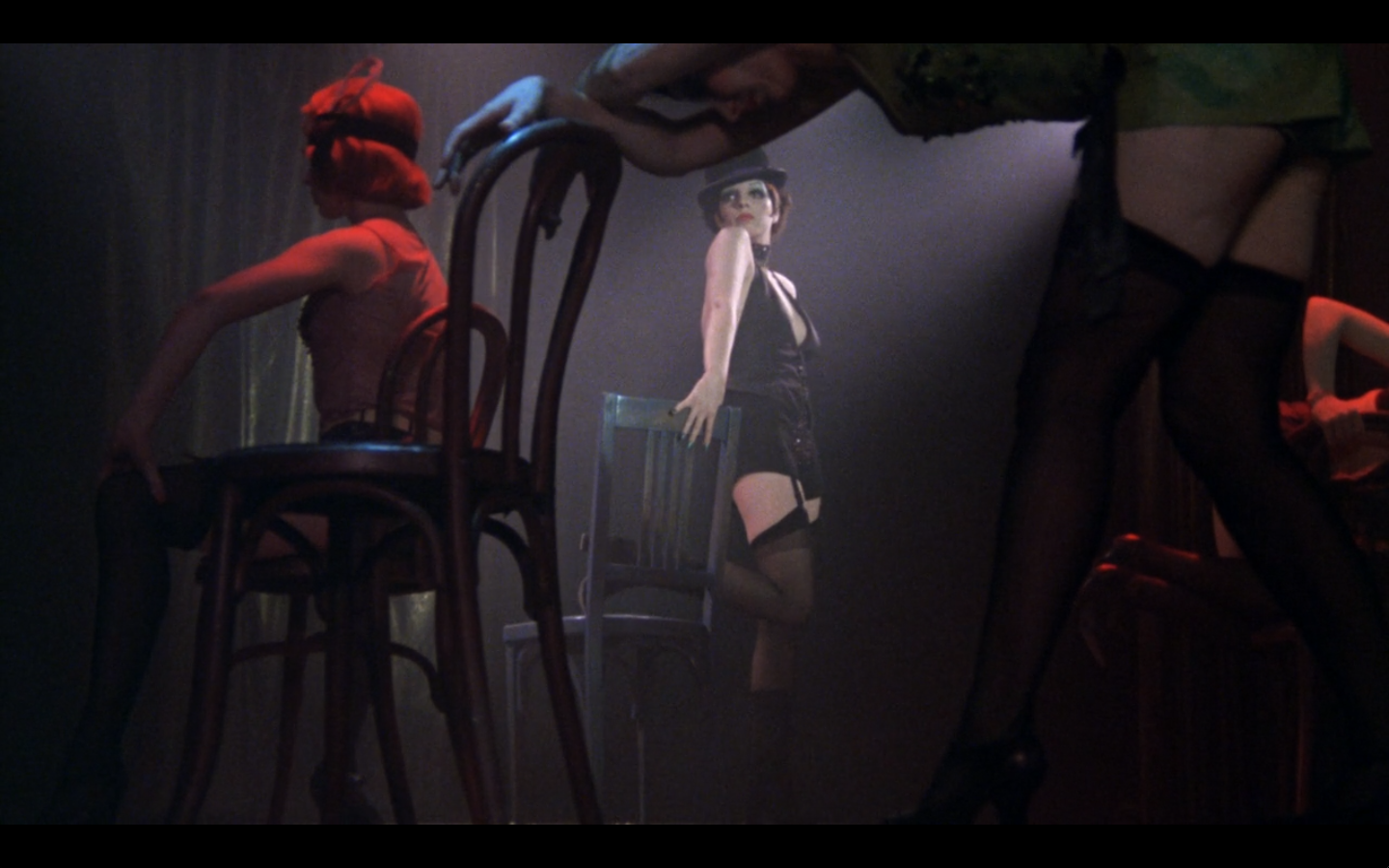
Outside of Best Picture, Marlon Brando wins Best Actor for the film (talked about here). Duh. Best Actress goes to Liza Minnelli for Cabaret (talked about here), Joel Grey wins Best Supporting Actor for the film (talked about here), and Bob Fosse wins Best Director for it (talked about here). I love the Best Actress decision, hate the Best Supporting Actor decision (seriously, not James Caan or Al Pacino?) and am completely perplexed by the Best Director decision (I love Bob Fosse, but even the DGA went with Coppola. But it worked out, since both Coppola and Fosse ended up with Oscars.) And the only award left was Eileen Heckart winning Best Supporting Actress for Butterflies Are Free (talked about here), which — okay. It was a weak category, and is pretty irrelevant historically.
Seriously, though — The Godfather. Let’s not play around here.
BEST PICTURE – 1972
And the nominees were…
Cabaret (Allied Artists)
Deliverance (Warner Bros.)
The Emigrants (Warner Bros.)
The Godfather (Paramount)
Sounder (20th Century Fox) (more…)
The Oscar Quest: Best Picture – 1973
Another one. This decade just knocks them out of the park, one year at a time. Seriously, has it ever been as good as it was here?
The Sting is such a great Best Picture choice I can’t even put it into words. It also won Best Director for George Roy Hill (talked about here), which — finally! After this and Butch and Sundance (not to mention Thoroughly Modern Millie), the man deserved it. Best Actor was Jack Lemmon for Save the Tiger (talked about here), which was about thirteen years overdue for him. Even though his category was tremendous, he did deserve to win. Best Actress was Glenda Jackson for A Touch of Class (talked about here), which would have been okay had she not won in 1970, but she did, which makes me not like this decision at all (plus if Ellen Burstyn won here, maybe Gena Rowlands could have won the year after this). Best Supporting Actor was John Houseman for The Paper Chase (talked about here). A veteran Oscar, and one I’d normally be okay with, but Jason Miller was so good in The Exorcist and Vincent Gardenia was so good in Bang the Drum Slowly that I just can’t like that decision. And Best Supporting Actress was Tatum O’Neal for Paper Moon (talked about here), which is seriously one of the best decisions of all time in the category. You know me and precocious child roles — this thing is just incredible. I loved that film and that performance so, so much.
Again, we have another 70s year hit right out of the park. I love how this decade is the complete antithesis to the 80s in almost every way. That’s so wonderful.
BEST PICTURE – 1973
And the nominees are…
American Graffiti (Universal)
Cries and Whispers (New World Pictures)
The Exorcist (Warner Bros.)
The Sting (Universal)
A Touch of Class (Avco Embassy) (more…)
The Oscar Quest: Best Picture – 1974
Oh, I love 1974 so much. (This will be, and has been, a recurring theme of the 70s with me.) Look at all five of these choices. And look at what won! Man, what a year.
The Godfather Part II, I think we can all agree, is one of the top five or ten best Best Picture winners of all time. Francis Ford Coppola winning Best Director for it (talked about here) is one of the top five Best Director decisions of all time, especially considering the Academy passed over him for the first Godfather. Robert De Niro also won Best Supporting Actor for the film (talked about here). I think we all know how good he was. Now, outside of those three — Art Carney wins Best Actor for Harry and Tonto (talked about here), which is one of the single worst Best Actor decisions of all time. Seriously Bottom five. Simply because Carney beat Al Pacino (in Godfather), Jack Nicholson (in Chinatown), Dustin Hoffman (in Lenny) and Albert Finney (in Murder on the Orient Express). None of these actors had an Oscar at this point, and this decision is what prevented Al Pacino from getting his Oscar until 1992 (and then prevented Denzel from getting his until 2001. Not to mention also potentially keeping Robert Downey Jr. and Clint Eastwood from an Oscar as well). I think we can agree it was bad. Best Actress was Ellen Burstyn for Alice Doesn’t Live Here Anymore (talked about here). It was a good decision. Burstyn was great in the role, but I can’t help but feel that Gena Rowlands deserved it more for A Woman Under the Influence. And Ingrid Bergman won Best Supporting Actress for Murder on the Orient Express (talked about here), which is clearly a veteran win, because she’s only on screen for five minutes and does next-to-nothing in the film.
Overall, 1974 is a huge success, and is in a way, the heart of the 70s. I’m seriously in awe of this decade.
BEST PICTURE – 1974
And the nominees were…
Chinatown (Paramount)
The Conversation (Paramount)
The Godfather Part II (Paramount)
Lenny (United Artists)
The Towering Inferno (20th Century Fox, Warner Bros.) (more…)