
Latest
Mike’s Top Ten of 1955
Well, I guess there’s really only one thing to discuss for 1955 — James Dean.
Not necessarily Dean himself, though he did have an amazing, brief career, with three all-time classics as his only features in which he starred. We need to talk about both what he represents — method acting, the teen culture of the 50s — and also how it relates to the big cultural film of the year: Rebel Without a Cause.
The 50s started to represent a societal disconnect between adults and teenagers. This was the first time the term generational gap became a thing. Here you have adults that were raised on wholesomeness and here are these teens that are listening to rock ‘n’ roll, smoking cigarettes and all this other stuff. The disconnect between parents and children would be a major theme of the next few years. You can’t discuss 1955 without James Dean and the generational gap being front and center.
Outside of that, there are some real classics we’re gonna talk about here. There are heavy hitters all over the board, across every genre. Read the rest of this page »

Mike’s Top Ten of 1954
1954 is notable for having three of the absolute greatest films ever made in it. Straight up, when people rank the best of the best — these movies will show up within the first 150.
Now’s also a good time to talk about the big elephant in the room as it relates to the 50s — television. The rise of television, coupled with studios having to give up ownership of their theaters meant they were increasingly nervous about the future of their product. (That’s right, this has been going on for years.) So they started making these gimmicks to get people into the theater. First, it was CinemaScope. And Cinerama. And all the different variants. Then it was 3D. There are a bunch of movies that were originally released in 3D spread around the 50s.
The other thing they did was find things TV couldn’t offer, like exotic locations. There was an increasing trend in the 50s of “runaway production,” which was essentially going off and shooting films entirely in other countries. The big one in this era was Italy. A lot of movies were shot on location in Italy in the 50s. Read the rest of this page »
Image
Pic of the Day: “You know why I like plants?” “Nuh uh.” “Because they’re so mutable. Adaptation is a profound process. Means you figure out how to thrive in the world.” “Yeah but it’s easier for plants. I mean they have no memory. They just move on to whatever’s next. With a person though, adapting is almost shameful. It’s like running away.”

Mike’s Top Ten of 1953
My favorite year of the 50s. 1953 has such amazing movies that are so near and dear to my heart. It just makes me happy to think about it. I wouldn’t necessarily say it’s the strongest year of the 50s, though I think it does make a solid case for itself as such. There are some all-time great films in this year.
What I love about this top ten list in particular is how it’s full of great directors. The top ten has films from Billy Wilder, William Wyler, Sam Fuller, George Stevens, Vincente Minnelli, Fred Zinnemann and Howard Hawks. Not only that, but they’re all classic films of theirs. These are films that are among people’s favorite films of all time. And on top of that, there are two films on here that are such gems and films that I love so much that it makes me happy just to think that they’re here.
I really love 1953. Read the rest of this page »

Mike’s Top Ten of 1952
1952 seems about the right time to address the elephant in the room. There are really only two major historical events that greatly impacted the film industry in the 50s. One we’ll get into in a couple years. Here, we need to address the first one, which is the Blacklist.
After World War II, the biggest threat to the American people was perceived to be Communism. The Soviet Union and America, the great superpowers, the Cold War — all that. America was really nervous about a communist influence seeping into its culture, a big part of which was, of course, Hollywood. Hollywood is generally a liberal place and a lot people had either openly been communists in the 30s or had at least dabbled in it for a while. And now that there was the House Un-American Activities and Joseph McCarthy, it wasn’t good for there to be communists hanging around. So in 1947, the first open blacklist in Hollywood happened. Which is the famous Hollywood Ten. It lasted for about 13 years, famously ending when Dalton Trumbo was credited for writing Spartacus.
But what was prevalent during this period, especially in the late 40s and early 50s, was a great divide in Hollywood. Stars were called to testify, to deny their connections to communism or communist sympathies, while also being called to “name names.” Essentially give up those people who were communists. Which is like being told to snitch on your friends and coworkers and ruin their lives for a “greater good.” And there were people who happily did this (Walt Disney), and others who opposed it (Bogart). But there were hundreds of people whose lives and livelihoods were ruined by being branded “un-American.” John Garfield actually died because of the stress his blacklisting inflicted on him. Read the rest of this page »
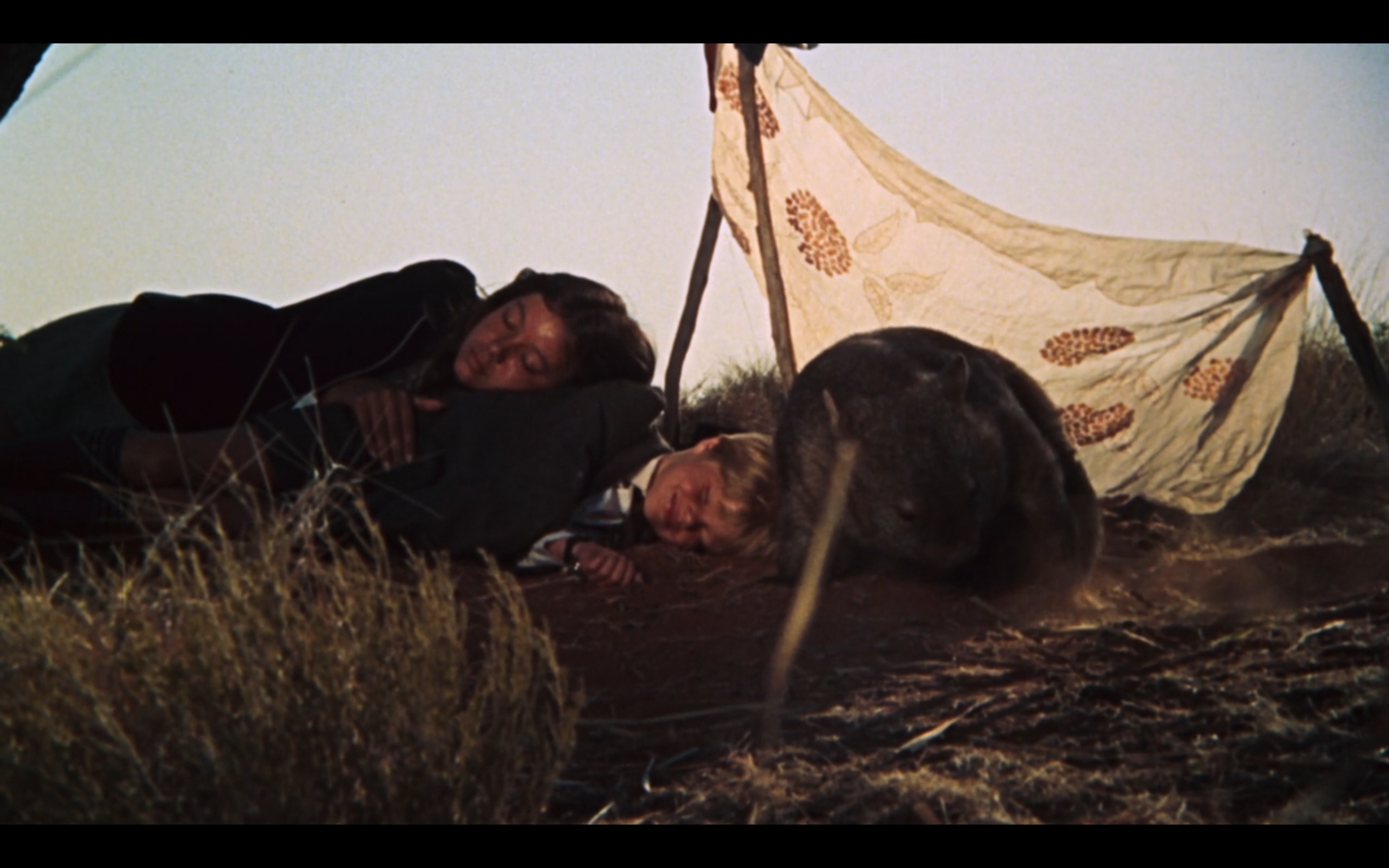
Mike’s Top Ten of 1951
I feel like there are two very important things to discuss for 1951. The first is color. I feel like 1951 is that year where we definitively reached the point where the majority of films were in color. I don’t think statistically that’s the case, but I feel like this year is the one where, after this, color is the norm for films and black and white is reserved for lower budgeted films or specific genres. That’ll definitely be the case once CinemaScope shows up in a couple of years.
The other major thing about 1951 is the beginning of a genre. Or at the very least, the beginning of a genre as we know it. And that’s sci fi. Sci fi existed in several forms before this, but this is the year where all the tropes we recognize — aliens, flying saucers, time travel, space exploration — this is when they all began. (And, as an added bonus, the sci fi films of this era also were Cold War-related.)
Outside of that, we’re starting to get into an era where most people would recognize the majority of my lists without needing much explanation as to what they’re about. Which means that all the hidden gems on the lists that people don’t know about are gonna be way more noticeable. Which is exciting. Read the rest of this page »
 B+ Movie Blog